Lakran — Private Cryptocurrency & Wallet
A Monero-fork privacy coin with an anonymous-transaction desktop wallet, CPU mining and its own exchange.
Problem
Mainstream payments are traceable, custodial and bound by borders — there was no lightweight, ASIC-resistant private coin with a full wallet and a place to actually trade it.
Result
A launched privacy cryptocurrency (LAK): CryptoNote-based wallet with ring signatures and CPU mining, a token-distribution model and a self-hosted USDT/LAK exchange.
Tech Stack
Overview
Lakran (ticker LAK) is a privacy-focused cryptocurrency launched in 2019, built on the CryptoNote protocol as a Monero-family fork. The project shipped as a full stack: a desktop wallet with anonymous transactions and built-in CPU mining, an on-chain coin with defined economics, and a self-hosted exchange where LAK traded against USDT and other assets. The pitch was simple — let anyone privately receive, spend and manage money with whatever device they already own.
Problem
Everyday digital payments leak data: they are traceable, run through custodians, and stop at national borders. Privacy coins solved part of that, but for a newcomer the experience was fragmented — you needed a coin, a trustworthy wallet, a way to mine or earn it, and somewhere to actually trade it. Each piece usually came from a different project with a different level of polish. Lakran set out to deliver all of it under one brand.
Solution
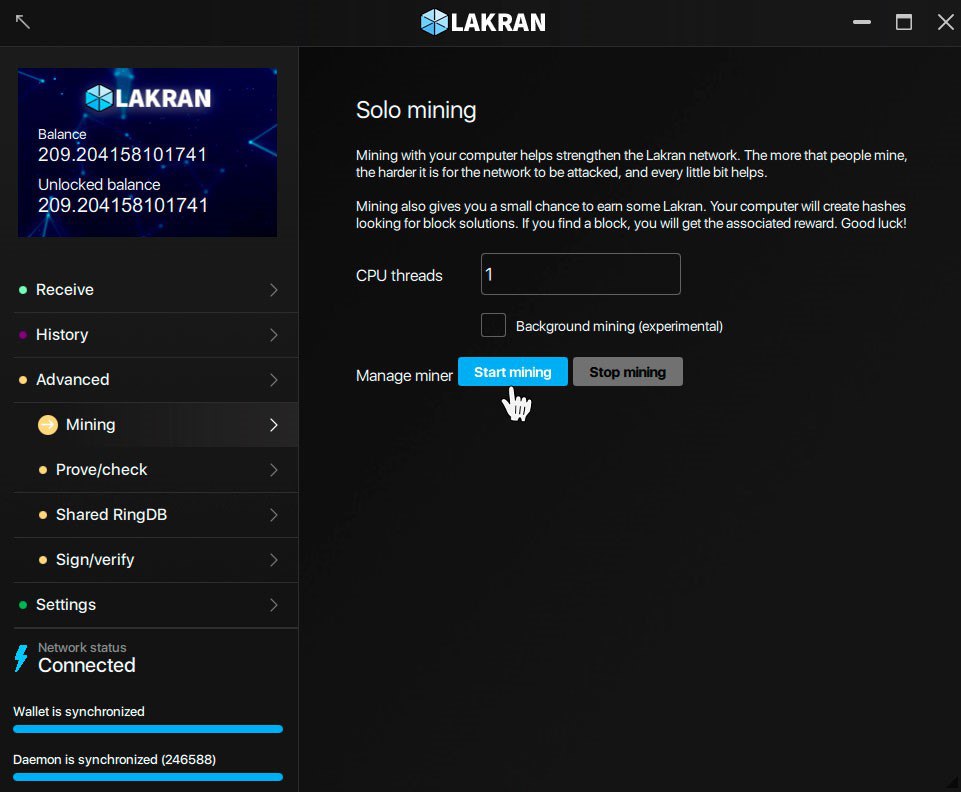
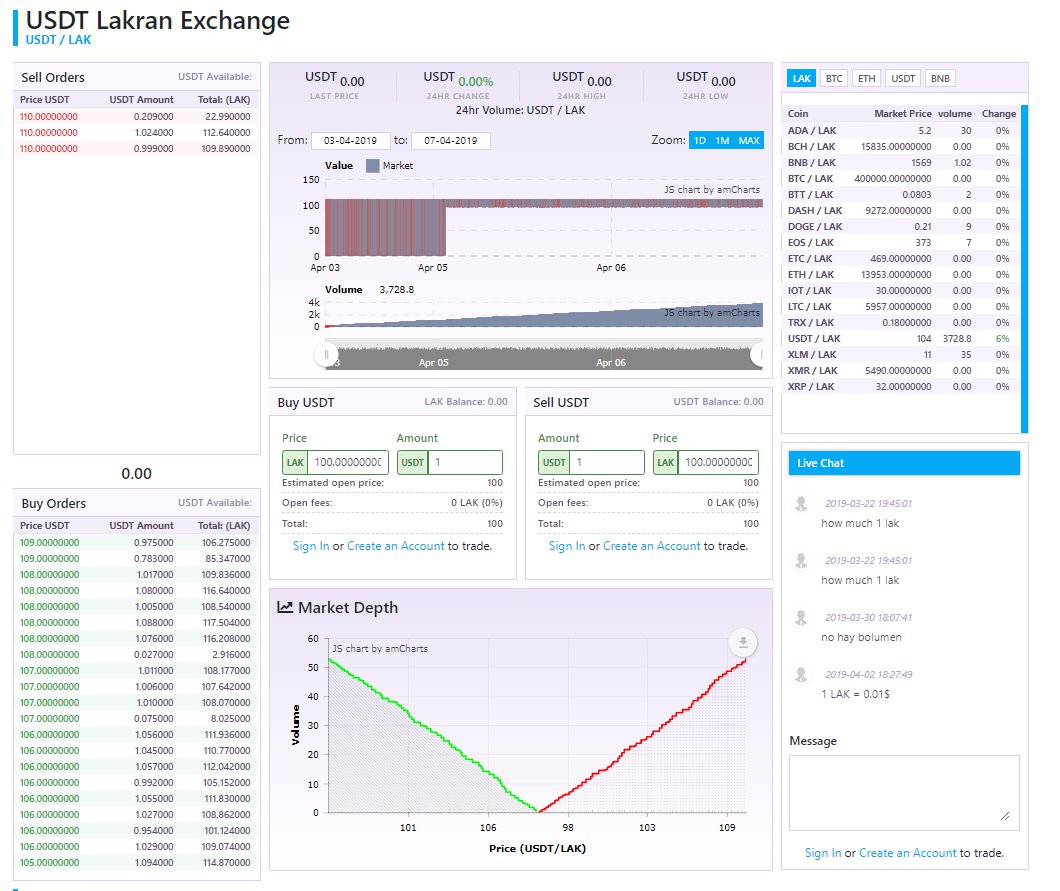
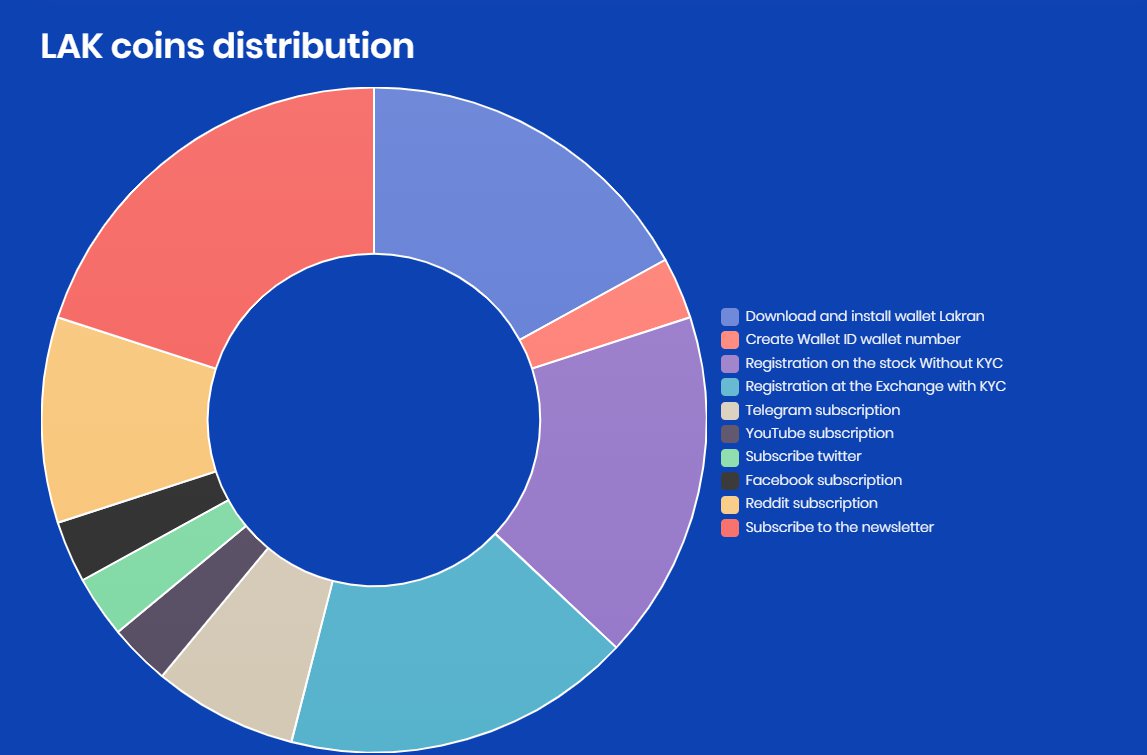
The coin is a CryptoNote/Monero fork using the lightweight CryptoNight-Lite proof-of-work, which keeps verification fast and mining ASIC-resistant (CPU/GPU). On top of the chain sits a Qt desktop wallet that handles ring-signature transactions, address generation, history, prove/check, shared RingDB and solo mining — the same surface a Monero user recognizes, rebranded and tuned for LAK. A separate web exchange provides an order book, candlestick and market-depth charts, a live chat and LAK trading pairs (USDT, BTC, ETH and more). Initial distribution ran as a task-based model — installing the wallet, creating a wallet ID, registering on the exchange and social subscriptions each earned a share of LAK.
Features
- CryptoNote-based privacy: untraceable payments via ring signatures, unlinkable transactions, blockchain-analysis resistance
- CryptoNight-Lite PoW — faster verification, ASIC-resistant CPU/GPU mining, blockchain pruning for scalability
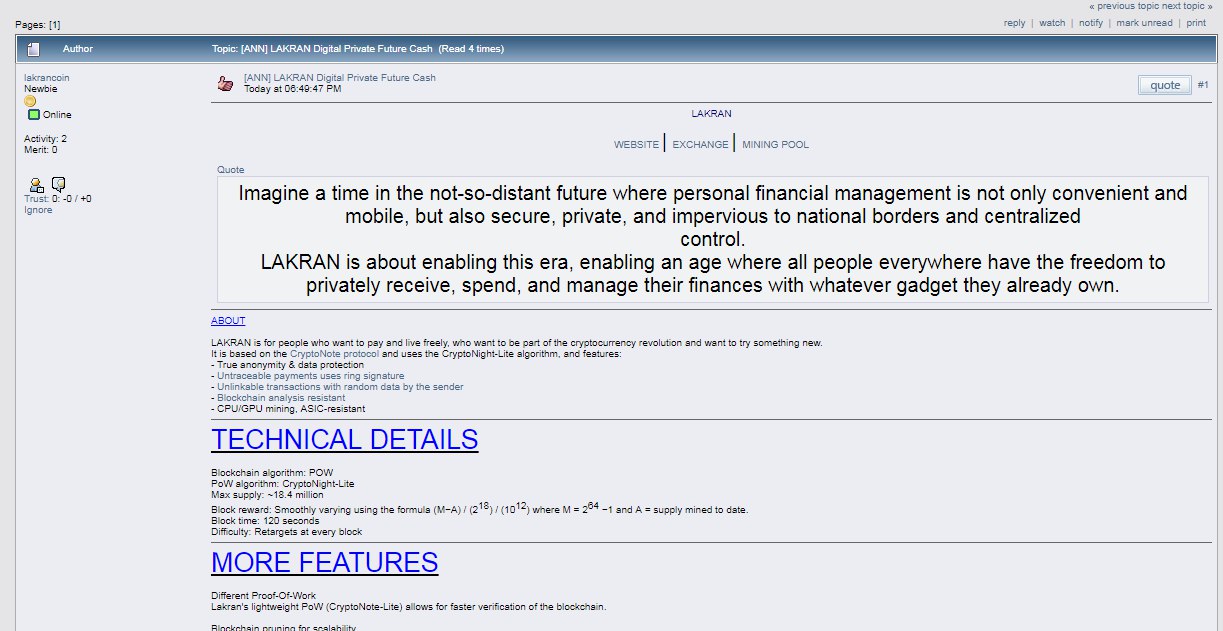
- Defined economics: ~18.4M max supply, 120-second block time, smoothly varying block reward, per-block difficulty retarget
- Desktop wallet: balance, receive, history, solo/background mining, prove/check, shared RingDB, sign/verify
- Self-hosted exchange: USDT/LAK and other pairs, order book, price + market-depth charts, live chat
- Task-based coin distribution across wallet install, KYC/no-KYC registration and social channels
Development Process
Forking a CryptoNote chain is the easy headline; making it a coherent product is the work. The wallet had to be rebranded and rebuilt from the Monero GUI codebase while keeping its privacy guarantees intact, the daemon and wallet had to stay in sync against the new genesis and parameters, and the exchange needed real order-matching, charting and a deposit/withdrawal path tied to the LAK daemon. The economic parameters — supply curve, block time, reward formula — were chosen up front because they are effectively permanent once the chain is live.
Results
- A live privacy coin with a working desktop wallet and CPU mining
- An end-to-end ecosystem — coin, wallet, mining and exchange — under a single brand
- A documented distribution model that bootstrapped early holders through tasks and referrals
- A public announcement and community presence around the launch
What Was Learned
Shipping a cryptocurrency is far less about the consensus code — most of which you inherit from the fork — and far more about everything around it: a wallet people trust, an exchange that actually fills orders, honest economics and clear communication. The hardest engineering wasn’t the hashing algorithm; it was making the daemon, wallet and exchange behave as one reliable system. That systems-over-screens lesson carried into later platform work.